Saturday, December 07, 2013

Sky to Earth

The MAX Green Line's SE Division station is bordered by a curving blue chain-link fence. The is actually the art installation for this MAX stop, which Trimet describes thusly:

Sky to Earth, by Carolyn Law, is a vivid sky blue fence that rides the visual edge between the light rail tracks on one side and the expansive topography of the surrounding land along the other side. The artwork's flowing and changing sculptural line shifts between solid and transparent, activating the site and the experience of MAX riders.

The artist's website has photos from various angles (all of which seem to be better than my viewpoint aboard a MAX train), and a longer explanation:

The design of the artwork relates specifically to the nature of the site and the alignment of the light rail track as well as dealing with the striking openness and topography of the land where the station and access paths will be located. The artwork rides the visual and experiential edge between all the site’s characteristics.

The site is an intense place with an expansive, open landscape framed by freeway lanes on one side. It can be viewed at many speeds and angles. The other sensory and physical undercurrent here is the sky and the wind. The wind appears to be nearly a constant. The grasses ripple elegantly and somewhat hypnotically, registering the caprice of the wind’s directions from moment to moment.

Within this landscape, the fence is a flowing, changing sculptural line of one color and a form that shifts between solid.

The same page also links to a story about Sky to Earth from "World Fence News", a trade paper that apparently exists. As a trade paper, it points out that a couple of local companies, Portland Fence Co. & Albina Pipe Bending, were key to putting this together. Not mentioned in that article, but found elsewhere on the net, a third company did post sizing and foundation design for the project.

In 2010 the national Chain Link Fence Manufacturers Institute awarded Sky and Earth its 2010 Les Grube Memorial Design Award; previous winners include the prominent architect Frank Gehry, so it seems like this is kind of a big deal, at least within the fence industry. The 2011 award went to a somewhat similar project in Boston, and the 2012 one went to a fence project for an overpass in Kansas City. The 2012 link goes to a page by the design firm explaining the project and going on about what a cool (and unfairly overlooked) material chain link fencing is.

The same year, the group Americans for the Arts named Sky to Earth one of 40 exemplary public artworks completed the previous year.

I suppose I'm pointing out the awards it's won, and the local construction and art fabrication jobs involved in creating it, because this is an artwork that would be easy to demagogue. It's easy to imagine people on talk radio or Facebook ranting about how it's not really art, it's just a chain link fence, we paid how much for it, the citified liberal elitists are trying to pull one over on us, etc., etc. It got a brief and mostly positive mention in an OregonLive article about some weird & alarming art along the WES commuter rail line. Surprisingly the article only has four comments, and they aren't all negative. I suppose modern art just isn't the conservative hot button issue it once was in decades past. That, or they just figure anything within Portland city limits is a lost cause at this point.

Tall and Fallen

Back in the naïve, low-tech days of yore (mid-2010), I'd just gotten a shiny new Blackberry phone, one with both a camera and a Twitter app, and I was pretty stoked about living in the future. The MAX Green Line was less than a year old then and I hadn't yet ridden it to the end at Clackamas Town Center, so one day I decided to make the trip and try this newfangled "live-Tweeting" thing I'd heard so much about. I even used the hashtag "#greenline", so, I guess, the entire world could follow my fearless expedition into Darkest Clackamas. Most of the photos I ended up with were of the new public art along the MAX line, although I wasn't really doing a public art blog project at the time. I think I was just trying to post at least one photo from each MAX station, without actually getting off the train, and the art seemed like a good way to tell the MAX stations apart.

In any case, I recently tracked these photos down in my old Twitpic account, and figured I could maybe reuse them here. None of them are that fabulous (though most are at least better than the one in this post), and if I was truly dedicated to this art project I really ought to go back, get off at each stop, and shoot some quality photos instead, and maybe hit the RAM Brewpub at the mall instead of grabbing tacos and tater tots at the food court like last time. But it's a rather long train ride just to get photos of things I already have photos of, and I'm positive it would be a long wait before I got around to it. Long story short, I'm going to go ahead and post with the photos I have, not with the ones I wish I had.

So this is one of the less successful photos of the series, from the SE Main St MAX station near Mall 205. If you look between the closing MAX doors and beyond the shelter you can see Tall and Fallen, the tall pillar with the jutting triangular bits. TriMet describes it:

The fan-shaped leaf of the ginkgo tree inspired Anne Storrs to create Tall and Fallen. Tall consists of seven abstracted ginkgo leaves cast in concrete and stacked inside four stainless steel poles. Fallen, constructed with the same leaves appearing singly or in pairs, suggests the gingko trees' fallen leaves.

I really do like this one, and I feel kind of bad my only photo of it is so terrible. The artist's web page about it has vastly better photos than mine, with a brief caption:

Inspired by the ancient ginkgo tree, this sculpture is created by stacking seven interlocking ginkgo-like concrete leaf forms in a stainless steel framework, 20’ x 3’ x 3’. More concrete ginkgo elements stacked singly or in pairs are found in the stations' landscape.

Looking around Storrs's website, I realized she also created Begin Again Corner, along the downtown Portland segment of the Green Line. I point this out because my photos in that post are actually pretty decent, in case you're wondering whether I ever take anything besides crappy camera phone shots.

If this was a professionally run blog on a platform less orphaned than Blogger, right about here is where you'd see a "Related Posts" or "You Might Also Enjoy" widget, with results probably generated by a simple keyword match, say on the word "ginkgo" for instance. In which case you'd see links to posts about ginkgo trees in the Plaza Blocks, and maybe the Ginkgo Petrified Forest in Eastern Washington, to pick two random examples with photos better than the one you see here. And if the algorithm looked at geotags, you might also get a link to Milestone P6, just north of Mall 205. Ok, there'd also be a "From Around The Web" section with links to crappy fad diets, celebrity news, anti-Obama rants, and bad investment advice, which is a big reason why I don't have a widget like that here.

Stone, Water and Heaven (Daedalus to Icarus)

Stone, Water and Heaven (Daedalus to Icarus) is one of a trio of Rose Quarter sculptures, along with Little Prince and Terra Incognita. This one is a bit more obscure than the other two, and is probably my favorite of the three. It's smaller, and sits at the corner of N. Winning Way & Center Court St. (and yes, those are stupid street names), streets that only see a lot of traffic on game days. I don't recall ever seeing it (or at least ever noticing it) before I tracked it down for this blog post. It's obscure enough that both the Smithsonian art db (the first link, above), and RACC call it by the wrong name, "Earth, Water and Heaven". The sign next to the piece says "Stone", not "Earth", as does an essay on the artist's website, which suggests to me that "Stone" is the correct name. Sadly (if we're going to be really pedantic about it), neither variation on the name includes an Oxford comma . Sigh.

RACC's description of the piece, wrong name and all:

Earth Water and Heaven (from Daedalus to Icarus), in contrast to the other two sculptures located in the Rose Quarter by Averbuch, is of moderate scale. It is also more quiet and meditative. This work deals with the dichotomy and integration of two different levels of meaning. One is the ring of stone and water tied in an everlasting balance of nature (rivers and mountains, oceans and continents). The other concept is about us as humans and our expressive aspirations for "heaven" represented by the image of a wing - an age-old icon that reappears in many cultures, describing our aspiration for greatness, fantasy and the supernatural. It is about the heroic feathers that we strive to have and that drive us further in life, about our aspirations that rise like the tower of Babylon, and about the actual gravity and balance of the earth that keeps us intact.

The artist's website also mentions a very similar 2003 piece, The Wing and the Ring, located at the city cultural center in Nahariya, Israel. The cultural center was built in the early 2000s and saw scandalous cost overruns, including all manner of lavish (and garish-sounding) furnishings.

Terra Incognita

At the east end of the Broadway Bridge is a sort of frontier fort-looking structure, guarding the northern approaches to the Rose Quarter area. It kind of looks like a children's play structure from a time before personal injury lawsuits, but it's actually Art. Terra Incognita is one of a trio of sculptures around the Rose Quarter, the others being Little Prince at the south end of the Rose Quarter, and the smaller Stone, Water and Heaven (which I haven't posted about yet), over toward the northeast corner of the district. RACC says of this one:

Terra Incognita is a massive gate-like sculpture at the foot of the Broadway Bridge. It forms a strong positive negative pattern of five cubes. The three lower cubes are bundles of tree trunks. In between these are two cubes made of piles of stone that are held in the air by the lower cubes. This work relates to its site in a broad context. It plays off the power of the natural landscape, the rivers, hillsides and mountains, as well as the power and scale of the man-made elements such as surrounding bridges and buildings. Averbuch felt that the dramatic relationship between wood and stone are appropriate for Portland. This sculpture has a feeling of fortification and frontier, elements the artist associates with Oregon.

I could be reading too much into it, but that description is phrased a bit oddly. It's as if they're gently pointing out the artist had some fanciful notions about our fair city. That is, we aren't actually a rugged Old West frontier city these days. We also weren't a frontier city back in 1995 when Terra Incognita went in, or at least it didn't seem that way at the time. The Old West may, however, be the one thing people outside the US know (or think they know) about Oregon, since we don't appear in the world's history books very often after 1859 or so. So when you ask someone from overseas (Israel in this case) to make something Oregon-themed, you could easily end up with something Western. Old West themes carry a lot of historical baggage around here, and the whole subject's been deeply unfashionable for several decades now, at least in the "serious" art world. You can probably still drive out to Bend or Joseph and pick up some bronze cowboy-n-Indian statues for your backyard, if you're into that sort of thing.

I suppose that's a danger when you insist your art has to somehow be "about" its location; you either hire artists from out of town and get headscratching stuff like this ( 'C" at Portland Public Art said of it "The first impression of the artwork is RACC (in 1995) was too cheap to mail Averbuch a Polaroid of the site." ); or you just hire locally and get a hundred variations on Heroic Salmon Swimming Upstream, or whatever the current fad happens to be.

Friday, December 06, 2013

Silicon Forest

Here are a few photos of Silicon Forest, the solar powered earth-o-licious tree structures at the Interstate/Rose Quarter MAX station. TriMet's Yellow Line art guide describes it:

Brian Borrello presents a three-part metaphor for displacement and change.
  • Illuminated metal trees generate their own electricity from solar panels.
  • A virtual campfire flickers with light at night, surrounded by stainless steel stump seats.
  • Light filtering through colored glass on shelter roofs simulates the dappled light of a forest.
  • Concrete tree rings in the platform symbolize the forest once abundant on the site.
  • Custom guardrails feature branching tree limbs and roots.

So it was created by the same guy who created People's Bike Library of Portland, and the blue ox feet at the Kenton MAX stop, and a number of other public art doodads around town that I haven't covered yet. Apparently he designed the entire MAX station, not just the trees, but I didn't realize that at the time and only have photos of the trees.

The usual idea with MAX station art, on any of the various MAX lines, is that it's supposed to be somehow inspired by or related to the surrounding neighborhood. I don't really envy the task here. Today it's just sports arenas and mass transit, and making MAX art about being a MAX hub might be too self-referential even for Portland. Until the early 1960s there was a thriving majority-black neighborhood here, before the bulldozers of urban renewal came and swept it away. That would be an obvious choice for a theme, but the excesses of urban renewal aren't exactly a happy, self-esteem-boosting topic, and TriMet probably wouldn't go for that. Maybe "metaphor for displacement and change" is an oblique reference to the area's history, I'm not really sure.

In any case, the name "Silicon Forest" has been a nickname for the Portland-area tech industry, coined (and trademarked) by Lattice Semiconductor in 1984 and swiftly adopted by local boosters, by analogy with "Silicon Valley". Though a proper pedantic engineer (such as, um, myself) would point out that the industry's westside office parks typically replaced farmland, not forests, technically. We do, at least, have a decent claim on the "Silicon" part of the name, since the design & initial manufacturing of Intel chips happens here. And the Trail Blazers (who play in the nearby Moda Center) are owned by a certain Microsoft mega-billionaire, and Microsoft products generally rely on said Intel chips. As far as I know that's the one tech industry connection to this particular spot in Portland.

Snowpocalypse 2013

Scenes from the snow day today. It doesn't rank among our top ten Snowpocalypses, to be brutally frank about it. It's no 2008 or 2007. It's not even a 2010. Still: Two cheers for (light & temporary) snow!

Little Prince

Some photos of Little Prince, the giant crown lying on its side in front of the Rose Garden Moda Center sports arena. The RACC page for it says:

The Little Prince is a partially buried copper crown located at the south end of the arena in the Rose Quarter. It is a piece about imagination, desires and aspirations, conquests and struggles. It is the job of the viewer to create the story that goes along with the crown. Is it a victory and position of honor waiting to be claimed, or is there another story? Only the viewer can say. Ilan's inspiration for this piece was the "Little Prince" by Antoine De Saint-Exupery, in particular, the first chapter where he talks about his drawing of a boa constrictor swallowing an elephant being misunderstood as a hat.

I have to say this crown really doesn't evoke The Little Prince for me. The baobab tree I saw recently did, but the crown seems to miss the point, somehow. I mean, it's been ages since I read the book, maybe there was a tipped-over crown in it that I've completely forgotten about, one that symbolized a key idea of the book, or was the focus of a major plot twist. I kind of doubt it though.

Legend has it that the crown will be tipped vertical if the Trail Blazers (who play at the, uh, Moda Center) ever win an NBA championship. It's been there since 1995 and we've never been in serious danger of finding out whether the legend's true or not. Some might argue that the tipped crown (or just the crown, period) brings bad mojo, sort of like the inverted trident logo the Seattle Mariners used to use. Others might argue that the Blazers have been cursed by the sports gods since 1984, when they chose not to draft Michael Jordan, picking the fragile, all-but-forgotten Sam Bowie instead, along the lines of the 84-year curse incurred by the Boston Red Sox when they traded Babe Ruth to the Yankees. On the bright side, if it's an 84 year curse, it won't be long until we're fully 1/4 of the way done with it. So there's that.

Speaking of baobab trees and such, it turns out there really is an asteroid B612, more or less: Asteroid 46610 Besixdouze, discovered in 1993 and named (I think) in 2002. The name is "B six twelve" in French, and the hexadecimal number B612 is 46610 in decimal. It was a cute idea, and why not? As of right now, there are over 380,000 asteroids whose orbits are known well enough to earn permanent ID numbers, and only 16,000 have been given actual names so far. Further off on a tangent, my first desktop PC at my first real cubicle-based job was named "\\Asteroid B612", which gave the IT department fits because of the space character in the name. I seem to recall that Windows versions after Windows 95 refused to let you create hostnames containing spaces. I could be wrong, I haven't tried it recently.

Friday, November 29, 2013

Lyon Arboretum


[View Larger Map]

Here's a slideshow of the University of Hawaii's Lyon Arboretum, at the uphill end of Oahu's Manoa Valley, next door to Manoa Falls. It's at the same city bus stop as Manoa Falls, so it's just as easy to get to: Ride bus #5 to the edge of suburbia, get off and walk uphill, and follow the signs. Or, of course, you can just drive there if you have a car, which I didn't. Then go to the little visitor center next to the parking lot, drop a few bucks in the donation box, and get a map. You're going to need the map, because you'll probably get lost. I did, briefly, and I almost never get lost. Having a map at least gets you un-lost eventually. There's mobile phone service around the visitor center -- some of the plants in the adjacent garden even have QR codes to scan for more information -- but cell service quickly fades out once you're in the forest, sadly preventing me from going on an Instagram rampage while wandering around, or from checking Google Maps while I was lost.

I'd love to be able to tell you all about all the tropical plants here, or at least about the ones I have photos of. The place is kind of overwhelming, though. I spent a couple of hours here and felt like I'd barely scratched the surface. I skipped most of the various side trails and took the main trail to the far end of the arboretum, trying to find the waterfall. Which is a different, and much smaller (and less impressive) waterfall than Manoa Falls. This seems to confuse visitors a lot. I had a group of Japanese tourists ask me for directions to Manoa Falls, and they were a bit crestfallen to find out they were in completely the wrong place. I gave them directions and later ran into them on the Manoa Falls trail, and they thanked me for pointing them in the right direction. So I felt like I'd done my good deed for the day.

It would be really easy to spend an entire day here, taking it slow and just wandering around looking at things and filling up a memory card with flower photos. Though I'd recommend taking the Manoa Falls trail too, for contrast. If you only visit the Lyon Arboretum, you might come away thinking this is what a regular Hawaiian rainforest looks like, and not realize how much selective planting and pruning and manicuring has gone into it.

Most plants aren't labeled, so knowing your way around tropical plants would enhance the experience, I'd imagine. I was surprised to learn that a heliconia is not quite the same thing as a banana plant, if that gives you some idea of my inexperience with tropical plants. The arboretum specializes in heliconias, ginger plants, palms, and bromeliads, among other things, so it wouldn't hurt at least know what those look like.

Two items of practical advice. First, there are mosquitoes. Wear DEET, or cross your fingers and try some supposed DEET alternative, or wear long pants & sleeves and hope for the best, whichever option you prefer. Second, it rains a lot here. 165 inches per year, or nearly half an inch per day, on average. The arboretum is just a few miles up the road from Waikiki and downtown Honolulu, but it's not unusual to have torrential rain here while it's sunny at the beach. Oahu microclimates are like that. At least the rain isn't cold, and individual storms don't seem to last long, so you can sort of work around the weather and explore between downpours.

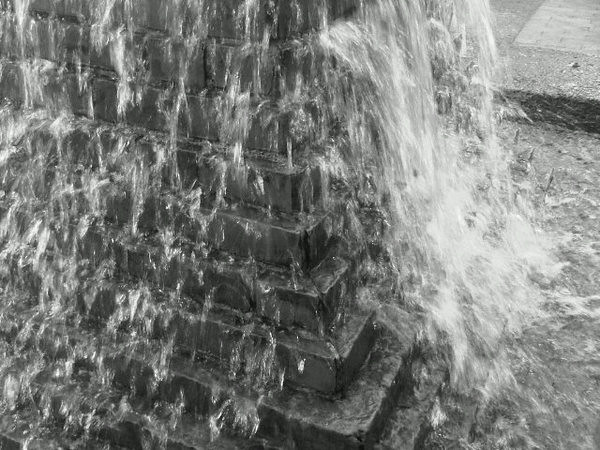
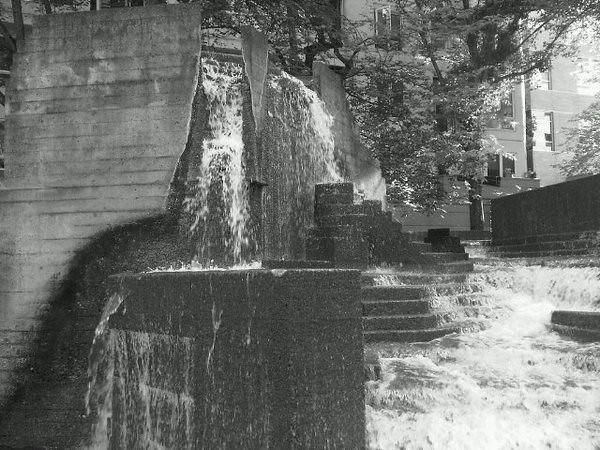
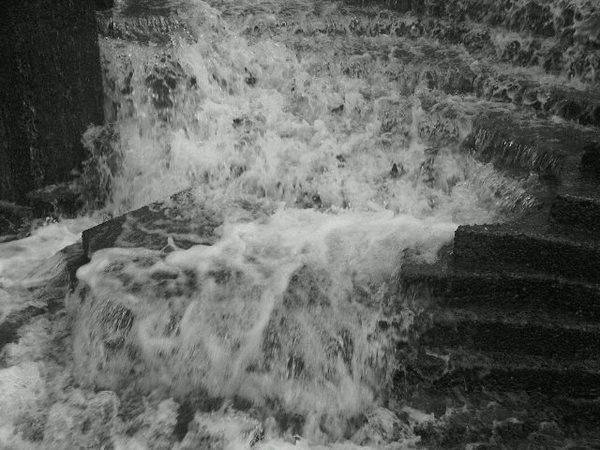
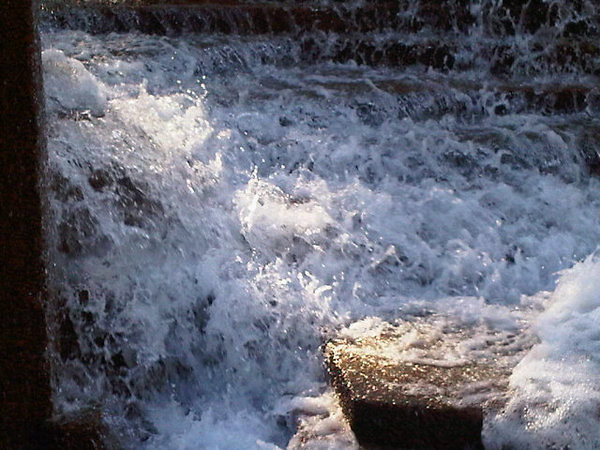
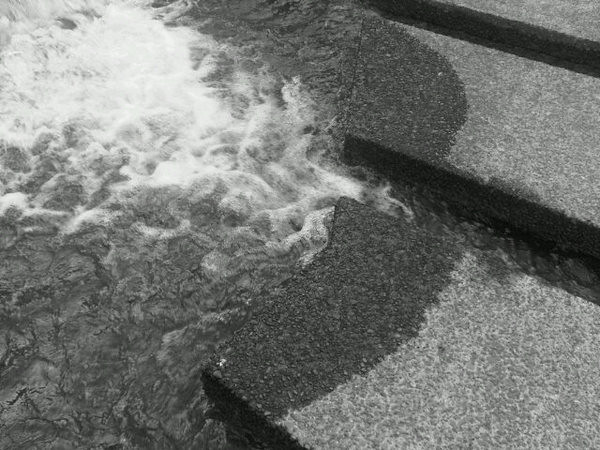
chimney fountain (twitpics)

Chimney Fountain Chimney Fountain Chimney Fountain

lovejoy fountain (even more twitpics)

Lovejoy Fountain Lovejoy Fountain Lovejoy Fountain Lovejoy Fountain Lovejoy Fountain Lovejoy Fountain Lovejoy Fountain

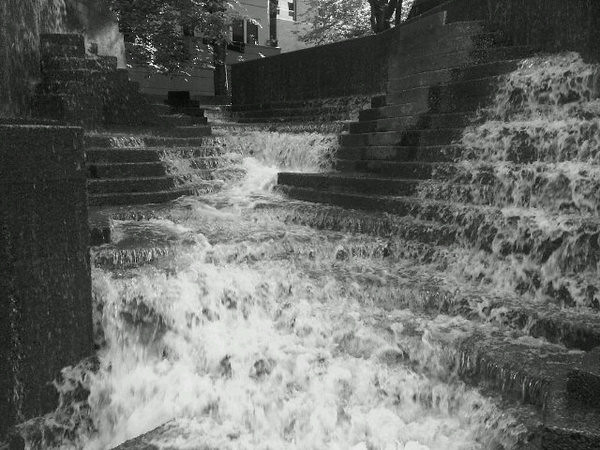
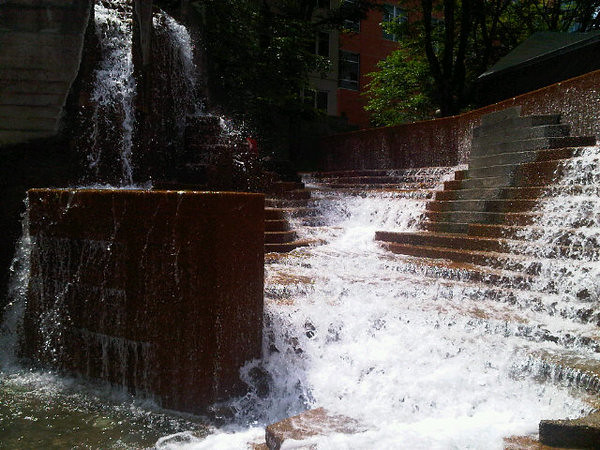
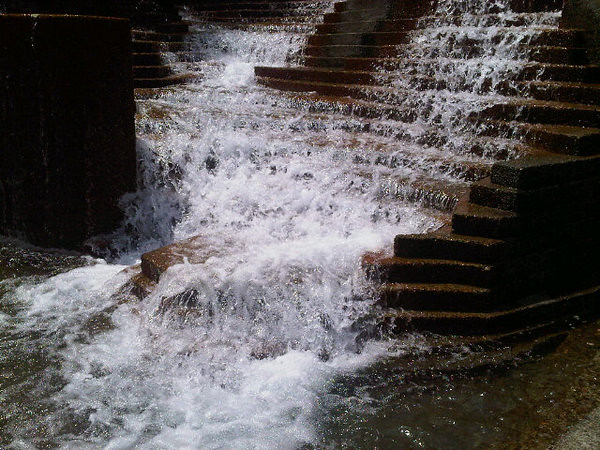
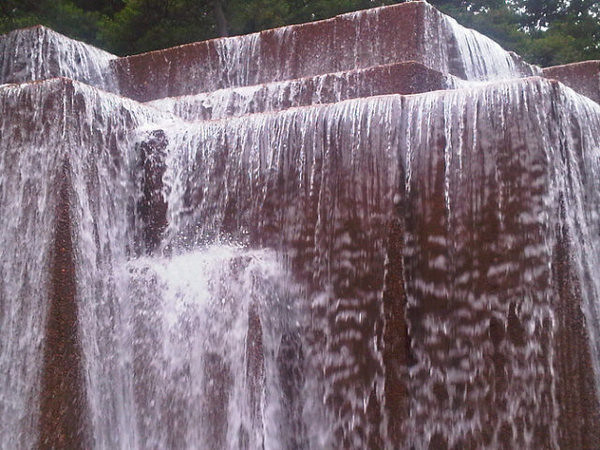
keller fountain (more twitpics)

Keller Fountain Keller Fountain Keller Fountain Keller Fountain Keller Fountain Keller Fountain

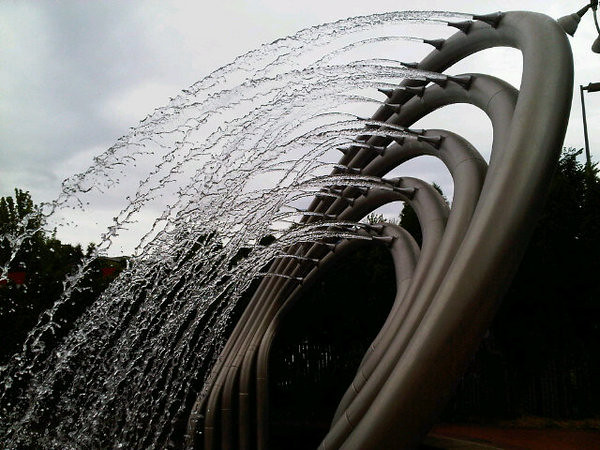
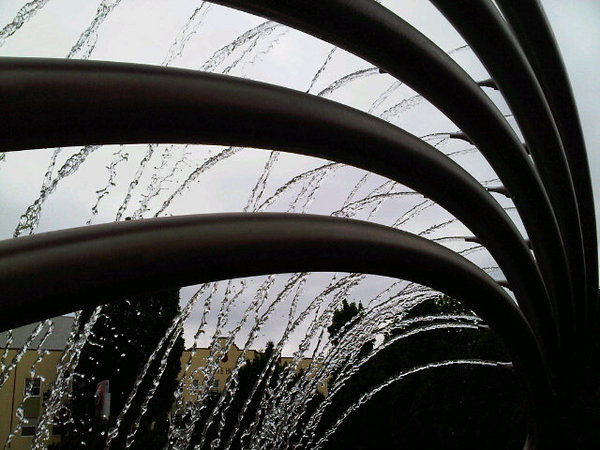
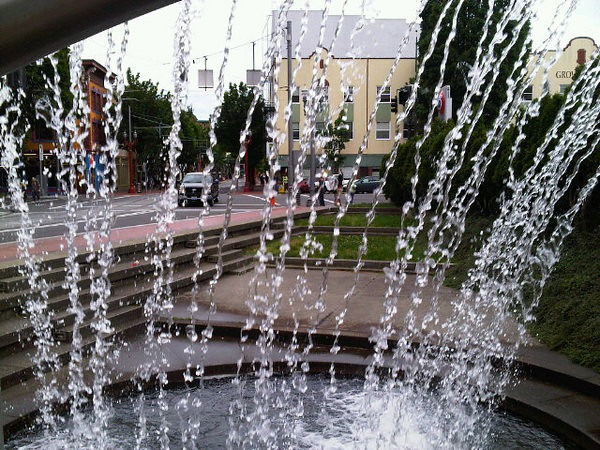
carwash fountain (twitpics)

Carwash Fountain

Some old Twitpics from several years ago, back when having a phone that combined a camera and Twitter seemed like a magical new thing, full of artsy possibilities...

Updated 9/17/14: Except that they aren't Twitpics anymore, as Twitpic's shutting down in a few days. Sic transit gloria mundi, or something.

Carwash Fountain Carwash Fountain Carwash Fountain

MSL, 2 years ago

Two Black Fridays ago, I was in Florida for the launch of the Curiosity mars rover. I've posted launch photos, photos of the rocket, etc, before, but just recently I remembered I'd posted a series of phone photos on Yfrog as part of the tweeting component of the tweetup. I had to do a bit of searching to find my old Yfrog account, which I really haven't used since I upgraded to an Instagram-capable Android phone. So these were all taken with a rather subpar Blackberry camera, but they still sort of capture the spirit of the event.